
If you work with steel, stainless, aluminum, cast iron, or thick plate welding, you’ve probably heard that your material “needs preheat.” But what does that actually mean, and when is it required?
This guide explains preheating in plain language, why it’s important, and how to apply it correctly to prevent cracking, distortion, or failed welds.
What is Preheating in Welding?
Preheating in welding means heating the base metal before welding begins.
The goal is to raise the temperature of the material to a safe level so the weld cools slowly and evenly.
- Reduces the chance of cracking
- Improves weld strength and penetration
- Prevents sudden temperature shock in the metal
Preheat is most common in carbon steel, alloy steel, stainless steel, aluminum, and cast iron.
Why Preheating is So Important
When cold metal is welded, it cools too fast.
Fast cooling causes internal stresses, and these stresses can create:
- Cracking
- Porosity
- Weak weld fusion
- Hard, brittle heat-affected zones
- Expensive rework or failed certification tests
Preheating slows down the cooling process, giving the weld time to properly fuse and relieve internal stress.
When Do You Need to Preheat?
You should consider preheating when:
- Welding thick or high-carbon steel
- Working with cast iron or hardened steel
- Making structural or pressure-rated welds
- Welding in cold environments
- Sections are highly restrained or under load
- Code specifications (AWS, ASME, API) require it
Rule of thumb:
The thicker and harder the metal, the more likely preheat is required.
Common Metals That Require Preheat
| Material | Typical Reason |
| Carbon steel | Prevent cracking from rapid cooling |
| High-carbon steel | Hardens quickly → preheat reduces brittleness |
| Stainless steel | Helps prevent distortion and carbide precipitation |
| Cast iron | Extremely brittle, preheat reduces cracking risk |
| Aluminum | Helps remove moisture and improve weld flow |
Exact temperatures depend on metal grade, thickness, and welding code.
How to Apply Preheat (Simple Methods)
Fabricators use several methods depending on part size and shop setup:
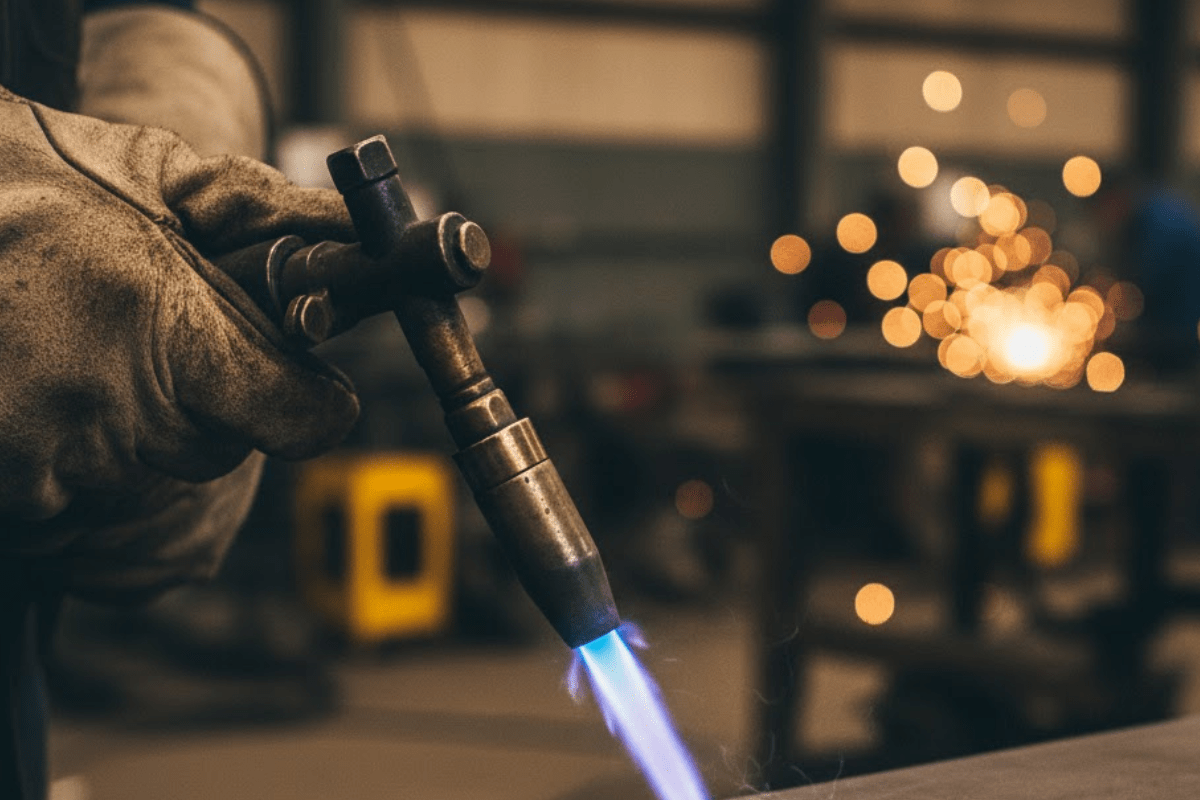
- Oxy-fuel torch – common in field welding
- Induction heating system – fast, even heating
- Electric resistance heaters / heating pads
- Furnace or oven preheat – for cast or complex parts
- Heat lamps or hot plates – small precision components
Always verify temperature with:
- Temp-indicating crayons
- Infrared thermometer
- Thermocouple probes
How to Know the Right Preheat Temperature
There is no single number, the correct temperature depends on:
- Metal chemistry (carbon equivalent)
- Thickness of the part
- Welding process (MIG, TIG, Stick, Laser)
- Joint design
- Code or engineer requirements
A welding preheat temperature chart or WPS (Welding Procedure Specification) gives the correct range.
Typical examples:
| Material | Thickness | Preheat Temp |
| Mild Steel | < 1 in | 50–150°F |
| High-Carbon or Alloy | 1–3 in | 200–400°F |
| Cast Iron | Any | 500°F+ (slow heat, slow cool) |
How Preheat Affects Welding Quality
- Lower cracking risk
- Better penetration
- Less hydrogen in the weld
- Reduced hardness in heat-affected zone
- Stronger, more ductile joints
- Higher chance of passing X-ray or bend tests
Skipping preheat can cause weld failures, especially in structural or pressure jobs.
Does Laser Welding Require Preheat?
In many cases, no, fiber lasers use focused energy and low heat input, reducing cracking risk.
But in certain applications (thick steel, cast metals, cold shop environments), light preheat may still be recommended to:
- Reduce stress
- Improve weld flow
- Prevent porosity
This is why many shops switching to handheld fiber laser welding see faster welding with less heat distortion and no need for heavy preheat equipment.
FAQs
- What happens if you weld without preheat?
You increase the risk of cracking, porosity, and hard brittle welds. - Is preheating only for thick metal?
Mostly, but also required for brittle or high-carbon materials. - How do you measure preheat temperature?
Temp crayons, IR thermometer, or thermocouples. - Do all welding codes require preheat?
No, but AWS, ASME, and API may require it for structural and pipe welding.
Conclusion
Preheating is one of the simplest ways to improve weld quality, reduce cracking, and avoid costly rework. Whether you’re welding mild steel, stainless, or cast iron, controlled heating helps your weld cool evenly and produce stronger results.
And for shops looking to reduce preheat time, warping, and edge burn-through, fiber laser welding systems offer a cleaner, faster, low-heat alternative for many metals. If your shop is ready to modernize welding capabilities with laser technology, Fiber Laser Welder LLC provides:
- USA-based sales, service, and training
- Handheld fiber laser welding systems
- Live demonstrations (in person or virtual)
- Fast delivery and financing options


