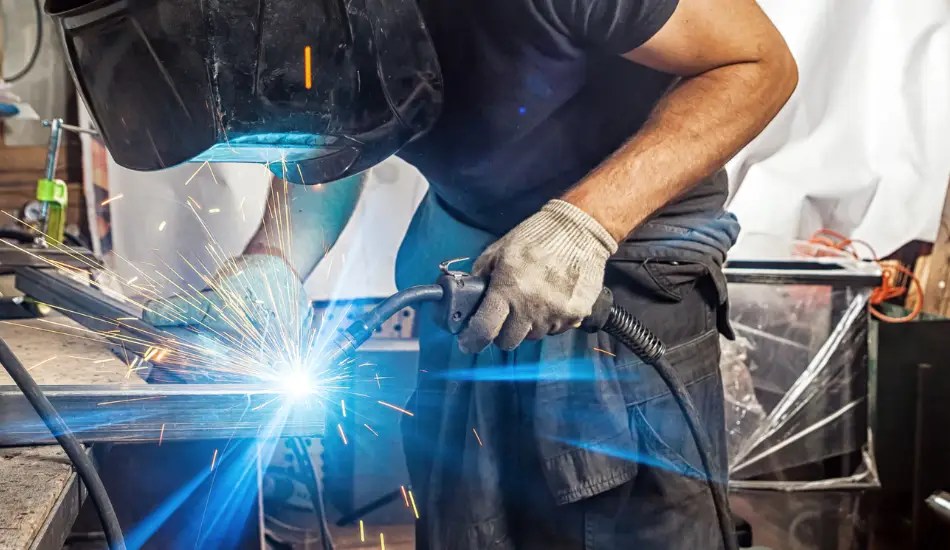
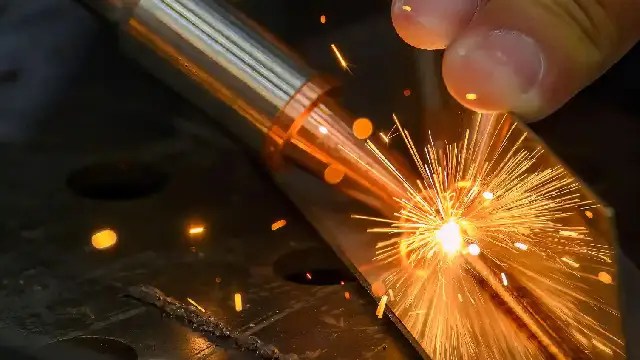
A handheld fiber laser welder works well on automotive exhaust systems because it produces a narrow, low-heat weld on thin stainless and aluminized steel tubing without the warping that MIG or TIG can cause on thin-wall exhaust pipe. Most exhaust tubing runs between 16 and 20 gauge (roughly 0.8mm to 1.2mm), which is thin enough that heat input, not just weld strength, is the deciding factor in whether a repair or a custom fabrication job holds up and looks clean.
Why Does Fiber Laser Welding Work Well on Exhaust Tubing?
Fiber laser welding concentrates heat into a small, precise spot instead of spreading it across a wider heat-affected zone the way MIG welding does. On thin exhaust tubing, that narrow heat-affected zone is what keeps the tube from warping or blowing through, which is the most common failure a shop sees when a less experienced welder tries to MIG or TIG thin-wall exhaust pipe. A 1,500W to 2,000W handheld fiber laser welder is enough power for most exhaust and muffler work, since the material is thin and the goal is a clean, low-distortion seam rather than deep penetration into thick base metal.
What Exhaust Materials Can a Fiber Laser Welder Handle?
A fiber laser welder handles the three materials most exhaust systems are built from: 409 stainless steel (the most common OEM exhaust grade), 304 or 316 stainless (used on performance and aftermarket systems), and aluminized mild steel (common on OEM factory exhaust before the catalytic converter). Each material behaves a little differently under the laser:
- 409 stainless: Welds cleanly with standard settings and argon shielding gas; this is the most forgiving of the three for shops newer to laser welding.
- 304/316 stainless: Slightly more prone to discoloration if shielding gas coverage is inconsistent, but produces the cleanest cosmetic weld of the group, which matters on visible aftermarket exhaust tips and headers.
- Aluminized mild steel: Requires slightly reduced power and travel speed compared to stainless to avoid burning through the aluminum coating and exposing bare steel at the weld line, which can lead to premature rust at the seam.
What Settings Should a Shop Start With for Exhaust Tubing?
Exact settings vary by machine wattage and tube wall thickness, but as a starting point for 18-gauge (about 1.0mm) stainless exhaust tubing on a 1,500W to 2,000W handheld unit, most fabricators run lower power and faster travel speed than they would on a thicker structural part, then dial in from a test coupon before running the actual pipe. Argon shielding gas at a moderate flow rate protects the weld pool from oxidation on stainless, which is what keeps the finished seam from showing the dark discoloration that signals a weak, oxidized weld.
| Exhaust Material | Typical Thickness | Shielding Gas | Common Issue if Overpowered |
|---|---|---|---|
| 409 Stainless | 16-20 gauge | Argon | Minor warping if travel speed is too slow |
| 304/316 Stainless | 16-20 gauge | Argon | Discoloration from inconsistent gas coverage |
| Aluminized Mild Steel | 18-20 gauge | Argon | Burn-through exposing bare steel, leading to rust at the seam |
Repair Work vs. Custom Fabrication: Does the Approach Change?
Repair welding a cracked flange or a rusted-through section of factory exhaust calls for lower power and careful fit-up, since the surrounding metal is often already thinned by corrosion before the repair even starts. Custom fabrication, building a full exhaust system or header from new stainless tubing, gives a cleaner starting material and more consistent settings from joint to joint. Shops doing both should expect to spend more time dialing in settings on repair jobs, where the condition of the existing pipe is the variable, than on new-build fabrication where the tubing gauge and grade are known up front.
What Mistakes Show Up Most Often on Exhaust Welds?
The two mistakes Fab-Line hears about most from shops new to laser welding exhaust work are running too much power for the wall thickness, which causes burn-through or visible warping on a bend or flange, and inconsistent shielding gas coverage, which shows up as discoloration or porosity along the seam. Both are settings and technique issues, not equipment limitations, and both are typically resolved with a test coupon of the same material and thickness before starting the actual repair or fabrication job.
Frequently Asked Questions
Can a fiber laser welder replace TIG welding for exhaust fabrication?
For thin-wall exhaust tubing, a fiber laser welder often outperforms TIG on speed and heat control, since the narrower heat-affected zone reduces warping on thin material. Shops doing thicker structural work outside the exhaust system still rely on TIG or MIG for those applications.
What wattage fiber laser welder is enough for exhaust work?
A 1,500W to 2,000W handheld unit covers the vast majority of exhaust tubing and flange work, since the material is thin gauge stainless or aluminized steel rather than thick structural metal.
Does fiber laser welding leave a cleaner finish on visible exhaust tips?
Yes, when settings and shielding gas are dialed in correctly, a fiber laser weld on stainless exhaust tubing typically requires less grinding and polishing than a MIG or TIG seam, which matters on visible aftermarket exhaust components.
Is aluminized steel harder to weld than stainless with a fiber laser?
It requires slightly more care because overpowering the weld can burn through the aluminum coating and expose bare steel, which then rusts at the seam. Reduced power and travel speed compared to stainless settings usually solves this.
“Exhaust work is one of the most common questions we get from body shops and custom fabricators looking at their first fiber laser welder,” said a Fiber Laser Welding product specialist with years of experience fitting handheld fiber laser welders to fabrication and body shops. “Once they see how little warping shows up on thin stainless compared to TIG, it usually settles the decision.” Fab-Line’s handheld fiber laser welders are sized from 1,500W to 2,000W to cover exhaust and muffler fabrication along with heavier shop work. Review the full product lineup, check pricing, and see capacity and material specs, compare the 1,500W and 2,000W models, or call (615) 333-7284 to request a free quote for your shop’s exhaust and fabrication mix.