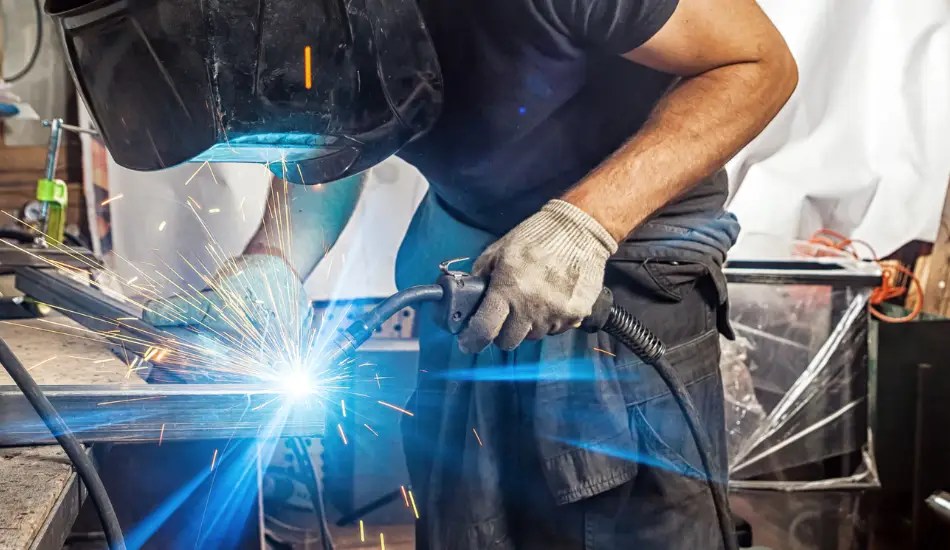
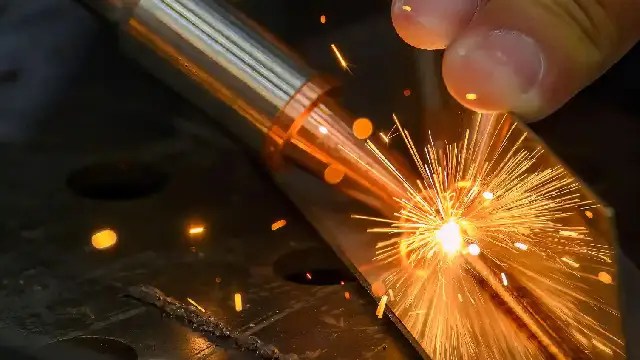
A trailer or RV repair shop lives on turnaround time. A customer with a cracked frame rail, a torn-out axle mount, or a rotted aluminum skin panel wants an estimate the same day and the trailer back on the road inside a week, not a month. Traditional MIG and TIG welding can do the job, but they bring heat distortion, slow prep, and thin aluminum panels that warp before the bead even cools. A handheld fiber laser welder changes that math for shops that repair trailers, horse trailers, cargo boxes, and RV chassis on a daily basis.
Why trailer and RV repair is a different job than fabrication shop welding
Most trailer and RV work is repair, not new build. That means welding on material that is already painted, already riveted, and often already thin from corrosion or years of road vibration. A shop doing frame repair on an aluminum RV skin or a galvanized cargo trailer needs a process that will not blow through a panel that is already down to a fraction of its original thickness. Fiber laser welding runs a smaller, more controlled heat-affected zone than MIG or stick welding, which means less warping on thin aluminum and galvanized steel, and less grinding and filler work afterward.
It also changes the estimate a shop can give a customer. A repair that used to mean pulling a skin panel, ordering a replacement, and losing a week to shipping can often become a same-day laser weld repair instead, because the process can close a tear or crack cleanly enough that a full panel swap is no longer the only option.
What kinds of trailer repairs benefit most
The repairs that show up every week at a trailer shop are the ones where a fiber laser welder earns its keep fastest:
- Aluminum skin panel repairs. Horse trailers, cargo trailers, and RV siding are frequently thin-gauge aluminum, often 0.03 to 0.08 inch. A fiber laser welder can close a tear or reattach a panel section without the heat warping the surrounding sheet, which is the failure point with a MIG repair on the same material.
- Frame rail and cross-member cracks. Steel and aluminum frame repairs need a clean, full-penetration weld that will not fail under road vibration. Fiber laser welding produces a narrower bead with less distortion of the rail itself, which matters on a frame that has to hold its original geometry.
- Axle mount and leaf spring hanger repair. These are structural repairs where heat control matters, since overheating a hanger weakens the surrounding steel and can shift a properly aligned suspension mount out of spec.
- Galvanized cargo box repair. Traditional welding on galvanized steel produces zinc fumes and a rough bead that needs regalvanizing or heavy coating afterward. A fiber laser weld is cleaner and needs less post-weld cleanup, and it produces less of the zinc fume that shops have to ventilate for.
- Torn or cracked diamond plate. Toolboxes, fenders, and ramp surfaces on utility and equipment trailers take repeated impact. A laser weld repairs a crack in diamond plate without leaving the ground-down, re-textured patch a MIG repair typically does.
Fiber laser versus MIG for common trailer repairs
| Repair type | MIG welding | Fiber laser welding |
|---|---|---|
| Thin aluminum skin (0.03 to 0.08 in) | High risk of warping and burn-through | Narrow heat zone, low warping risk |
| Galvanized cargo box steel | Heavy zinc fume, rough bead, recoat needed | Cleaner weld, less recoat labor |
| Frame rail cracks | Wider heat-affected zone, more grinding | Narrower bead, less finish work |
| Diamond plate patch | Visible ground and re-textured patch | Cleaner blend into surrounding surface |
How much faster is the actual repair?
Shop owners who switch from MIG to a handheld fiber laser welder for thin-gauge and aluminum repairs typically report less time in post-weld grinding and finishing, since the bead itself needs minimal cleanup. The time saved is mostly in prep and finish work, not in the arc time itself. For a shop billing by the job rather than the hour, cutting an hour of grinding and filling off every aluminum skin repair adds up across a week of work, and it means a customer waiting on an estimate hears a shorter number.
The other place shops see time back is rework. A warped aluminum panel from a MIG repair sometimes needs a second pass to true it back up, or in worse cases a full panel replacement anyway once the heat damage is visible. A cleaner first weld with less distortion means fewer trailers coming back for a second look at the same repair.
What wattage does a trailer repair shop actually need?
Most trailer and RV repair work does not require the highest wattage machines on the market. A 1500W to 2000W handheld fiber laser welder covers the material range a repair shop actually sees: aluminum panels from 0.03 to 0.1 inch, steel frame stock up to roughly 3/16 inch, and galvanized cargo box panels in between. Shops that also do occasional structural steel work on heavier frame stock, like flatbed deck repair or gooseneck frame work, should look at the higher end of that range or confirm duty cycle specs before buying, since sustained welding on thicker steel puts more demand on the machine’s cooling system than short aluminum repairs do. A narrower heat-affected zone is well documented in welding literature, including this overview of heat-affected zone formation, which describes the same underlying mechanism that gives laser welding its advantage over MIG on thin material. Our team has years of experience matching wattage to repair volume rather than selling shops more machine than the job calls for.
Do you need a different machine for aluminum versus steel repairs?
No. A single handheld fiber laser welder handles both material types, the operator adjusts wire feed, shielding gas, and travel speed for the material rather than swapping equipment. That is one of the practical advantages for a repair shop that sees a mix of aluminum RV panels and steel trailer frames in the same week: one machine, one operator, no equipment changeover between jobs and no second machine sitting idle while the other one is in use. See current model specs and pricing on the pricing page.
What does it take to bring an existing welder up to speed on the new equipment?
A shop switching a MIG or TIG welder over to a fiber laser welder is not starting from zero. The torch handling is closer to TIG in feel, since the operator is guiding a small, controlled point of heat rather than managing arc length and puddle the way MIG requires. Most experienced welders need a few days of supervised practice on scrap material before they are comfortable running production repairs, and the real learning curve is dialing in settings per material and thickness rather than relearning how to hold a torch. Shops that do a mix of aluminum and steel repairs in the same week get the most value out of training one operator across both materials rather than splitting the work.
Frequently asked questions
Can a fiber laser welder repair a cracked aluminum RV frame without replacing the whole section?
Yes. A fiber laser welder can close a crack and reinforce the surrounding area with a controlled, narrow heat-affected zone, which is why it is used for spot repairs rather than requiring a full panel or frame section replacement in most cases.
Will fiber laser welding work on rusted or corroded trailer frame steel?
The area around a repair still needs to be cleaned to bare metal first, the laser process does not weld through rust or coatings any more than MIG does. Once the area is prepped, the controlled heat input is an advantage on corrosion-thinned steel because it is less likely to blow through where the metal is already at its thinnest.
Is a handheld fiber laser welder hard for an existing MIG or TIG welder to learn?
Most experienced welders pick up the hand motion within a few days of supervised practice, since the torch handling is closer to TIG than to MIG. The learning curve is mostly about dialing in settings per material, not about the physical technique itself.
What is the typical payback period for a trailer repair shop?
It depends on repair volume, but shops running several aluminum or thin-gauge repairs a week see the machine pay for itself through faster turnaround and reduced finishing labor within the first year, faster for high-volume shops that repair trailers as their primary business rather than as occasional side work.
Can one machine handle both cargo trailer steel and RV aluminum siding?
Yes, a single handheld fiber laser welder in the 1500W to 2000W range covers both material types. The operator changes settings for the material rather than switching machines, which is one of the reasons shops running a mixed repair schedule choose fiber laser welding over keeping separate MIG setups for each material.
Fab-Line supplies and supports handheld fiber laser welders for trailer, RV, and mobile repair shops nationwide, with equipment sized to match real repair volume rather than a one-size machine. Call (615) 333-7284 or request a quote to talk through wattage and material range for your shop.